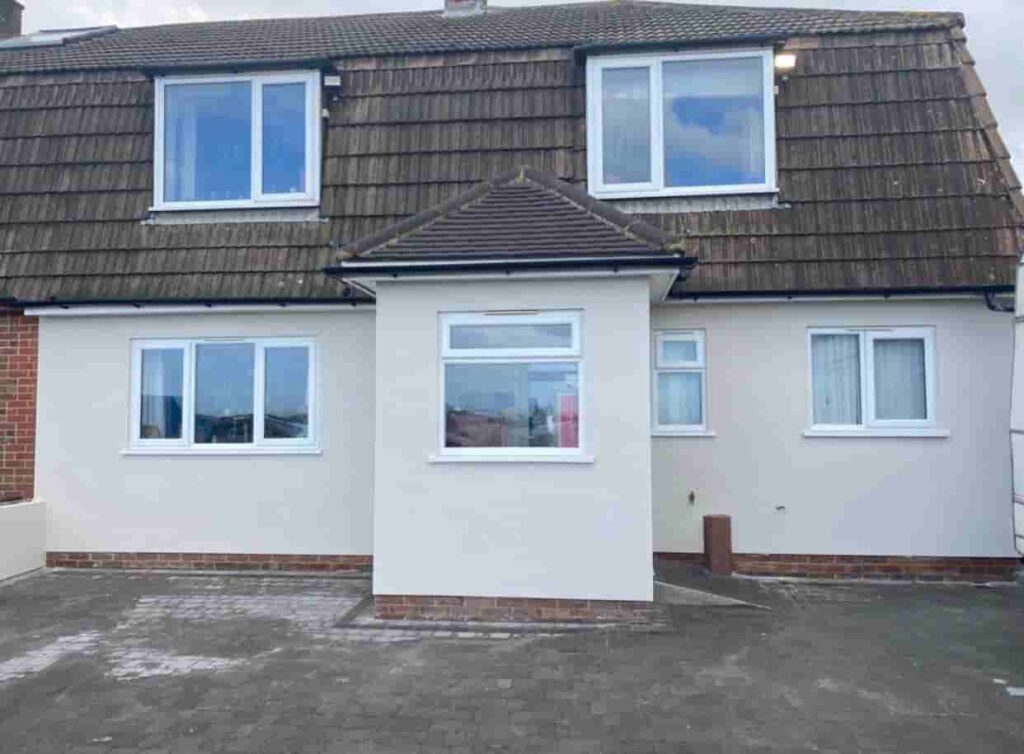
A pitched roof can appear perfectly sound from ground level while still allowing water into the property. Although cracked or missing tiles are familiar causes of leaks, they are only one part of the roofing system. Problems can also develop beneath the visible covering or around the points where different materials and roof sections meet.
For property owners in Crawley, West Sussex, understanding these less obvious weaknesses can help explain why a professional inspection is important when damp patches, discolouration or dripping water appear indoors.
Hidden Causes of Leaks on Pitched Roofs
Damaged or Deteriorated Underlay
The underlay beneath the tiles provides an additional barrier against wind-driven rain and moisture that passes through small gaps. Over time, it may become brittle, torn or degraded.
Even when the tiles above look intact, damaged underlay can allow water to reach the battens, rafters and ceiling below. Deterioration is often more noticeable near the lower edge of the roof, around penetrations or in areas where moisture has repeatedly collected.
Failed Lead Flashing
Lead flashing protects vulnerable junctions where the roof meets chimneys, adjoining walls and other raised structures. It must remain securely fitted and correctly shaped to direct water over the roof covering.
Cracked, lifted or displaced flashing can create a narrow entry point that is difficult to see from below. Water may then travel beneath the tiles before becoming visible inside the property, making the source appear unrelated to the internal damp patch.
Problems Around Roof Valleys
A valley is the channel formed where two sloping roof sections meet. Because it carries a concentrated flow of rainwater, even a small defect can result in significant moisture penetration.
Leaks may develop when the valley lining deteriorates, surrounding mortar fails or debris restricts drainage. The nearby tiles can remain in good condition while the valley itself allows water into the roof structure.
Worn Ridge and Hip Details
Ridge and hip tiles protect the highest points and external angles of a pitched roof. Although these tiles may appear unbroken, the material securing them can deteriorate or movement may create gaps beneath their edges.
Rain driven by strong winds can enter these openings and pass into the roof space. A close inspection is therefore needed to assess the complete detail rather than the visible tile surfaces alone.
Defects Around Roof Penetrations
Vent pipes, rooflights and other penetrations interrupt the continuous roof covering. Each one requires correctly installed seals, flashings or weatherproof collars.
These components may split, loosen or separate from adjacent materials over time. The surrounding tiles can look unaffected while water enters through a failed seal at the penetration.
Slipped Tiles That Are Difficult to Spot
A tile does not need to be visibly broken to cause trouble. It may have slipped slightly after a fixing failed, creating a gap in the overlap. From the ground, the roof can still look uniform, particularly when the movement is minor.
Professional roofers can inspect the alignment, overlaps and fixings at close range to identify movement that would otherwise be overlooked.
Condensation Can Resemble a Roof Leak
Not every damp mark beneath a pitched roof is caused by rain entering from outside. Warm, moist air can condense in a poorly ventilated roof space, dampening insulation and timbers before affecting the ceiling.
Establishing whether moisture comes from a roofing defect or internal condensation is essential. Treating the wrong cause will not resolve the problem and may allow deterioration to continue unnoticed.
Water Rarely Appears Directly Below the Defect
Once water enters a pitched roof, it can follow underlay, rafters, battens or pipework before dripping onto the ceiling. The visible stain may therefore be several metres from the damaged component.
This is why simply repairing the roof directly above an internal mark may be ineffective. Accurate leak detection involves tracing moisture back to its true entry point and examining the surrounding roof details.
What a Professional Roof Inspection Should Check
A thorough inspection should consider the pitched roof as a complete weatherproofing system. Depending on the symptoms and accessibility, this can include:
- Tile condition, alignment and overlaps
- Underlay and roofing battens
- Valleys, ridges and hips
- Chimney and wall flashings
- Rooflights, vents and pipe penetrations
- Gutters and drainage routes
- Roof-space timbers, insulation and ventilation
- Water staining and signs of previous moisture movement
This methodical approach helps ensure that repairs address the underlying defect instead of only treating its visible effects.
Why Early Investigation Matters
A minor entry point can allow repeated moisture exposure during wet weather. If left unresolved, water may affect timber, insulation, plasterwork and decorative finishes. Damp materials can also take time to dry, so the effects may continue after the rain has stopped.
Arranging an assessment when the first warning signs appear can keep the affected area more contained. Look out for ceiling stains, peeling finishes, damp roof timbers, musty odours or marks that darken after rainfall.
Conclusion
Pitched roofs can leak even when their tiles look fine because water may be entering through damaged underlay, failed flashing, worn valleys, defective junctions or poorly sealed penetrations. Slight tile movement and condensation can also create problems that are not obvious from outside.
Finding the exact source requires more than a ground-level visual check. Crawley Roofing Repairs provides professional roof inspections and targeted repairs in Crawley, West Sussex. If you have noticed signs of water ingress, contact the team to arrange an assessment and determine the appropriate repair.
Call us on: 01293 221 999
Click here to find out more about Crawley Roofing Repairs
Click here to complete our contact form and see how we can help with your roofing needs.